The landscape of modern acoustics is undergoing a seismic shift as we move away from traditional stereo systems toward the immersive world of spatial computing. For decades, high-fidelity audio was defined by the quality of physical speakers and the precise placement of a listener in a “sweet spot” between two channels. However, the integration of advanced sensors and real-time digital signal processing is now allowing us to recreate three-dimensional soundscapes that feel incredibly lifelike.
This revolution in sound technology is not just about adding more speakers; it is about using complex algorithms to trick the human brain into perceiving distance, height, and movement. As we embrace virtual and augmented reality, the demand for audio that matches the visual depth of these environments has become a top priority for engineers. Spatial computing allows for a personalized listening experience where sound objects can be pinned to specific coordinates in a room, regardless of where the listener moves.
This means that a musical performance or a cinematic scene can literally surround you, providing a level of emotional intimacy that was previously impossible. We are moving toward a future where “hearing” is no longer a passive activity but an interactive journey through digital space. This article explores the technical foundations of this movement and how it is redefining our relationship with sound in every aspect of life.
The Fundamental Science of Binaural Audio

To understand how spatial computing works, we must first understand how humans process sound in the real world. Our brains use tiny differences in time and volume between our two ears to locate a sound source.
A. Interaural Time Difference (ITD)
This refers to the slight delay it takes for a sound to reach one ear versus the other. Even a few microseconds of difference allow the brain to calculate the horizontal angle of a sound.
B. Interaural Intensity Difference (IID)
If a sound comes from the right, your head acts as a physical barrier that slightly muffles the sound reaching your left ear. Spatial computing uses digital filters to simulate this “head shadow” effect perfectly.
C. Head-Related Transfer Functions (HRTF)
Everyone has a unique ear shape that changes how sound waves enter the ear canal. Modern audio systems use HRTF algorithms to personalize the 3D effect for different individual profiles.
The Shift From Channel-Based to Object-Based Audio
In the past, engineers mixed audio for specific speaker setups like 5.1 or 7.1 surround sound. Spatial computing introduces “object-based” audio, where sounds are treated as independent entities with their own metadata.
A. Defining Sound Objects in 3D Space
Instead of sending a sound to the “left rear speaker,” an engineer gives a sound object specific X, Y, and Z coordinates. The playback system then calculates how that should sound based on your current position.
B. Dynamic Rendering in Real-Time
Because the sound is not baked into a fixed channel, the system can move a “bird chirp” sound object across the room smoothly. This provides a much more fluid and realistic transition than traditional panning.
C. Scalability Across Different Devices
Object-based audio works whether you are using high-end headphones or a 20-speaker home theater. The software simply re-renders the objects to fit the available hardware at that moment.
Integrating Spatial Computing With Wearable Tech
The most common way people experience spatial sound today is through advanced headphones and “smart” eyewear. These devices use internal sensors to track your every movement.
A. The Importance of Low-Latency Head Tracking
Gyroscopes and accelerometers track your head’s rotation hundreds of times per second. If you turn your head toward a virtual sound, the system must shift the audio instantly to maintain the illusion.
B. Acoustic Transparency and Transparency Modes
Modern wearables can blend digital sounds with the real world around you. This allows for “audio augmented reality,” where a virtual tour guide sounds like they are standing right next to you in a museum.
C. Personalized Ear Canal Calibration
Some high-end devices use internal microphones to measure how sound reflects inside your specific ear. This data is used to create a custom EQ profile that maximizes clarity and spatial accuracy.
Computational Audio and Room Mapping
Spatial computing doesn’t just care about your head; it cares about the room you are standing in. Sound behaves differently in a tiled bathroom than it does in a carpeted living room.
A. Active Room Sensing and LiDAR Integration
Devices can now use light and sound pulses to map the walls and furniture in your house. The audio engine then adjusts the “reverb” and “echo” of virtual sounds to match the physical environment.
B. Virtualizing Speaker Arrays in Any Space
Through “beamforming” technology, a single soundbar can bounce sound waves off your walls to make it seem like you have speakers behind you. This creates a massive soundstage without the need for messy wires.
C. Managing Virtual Occlusion and Obstruction
If a virtual sound object moves behind a physical wall in your room, the system can automatically muffle the sound. This level of environmental awareness makes the digital experience feel tangible.
The Impact on Professional Music Production
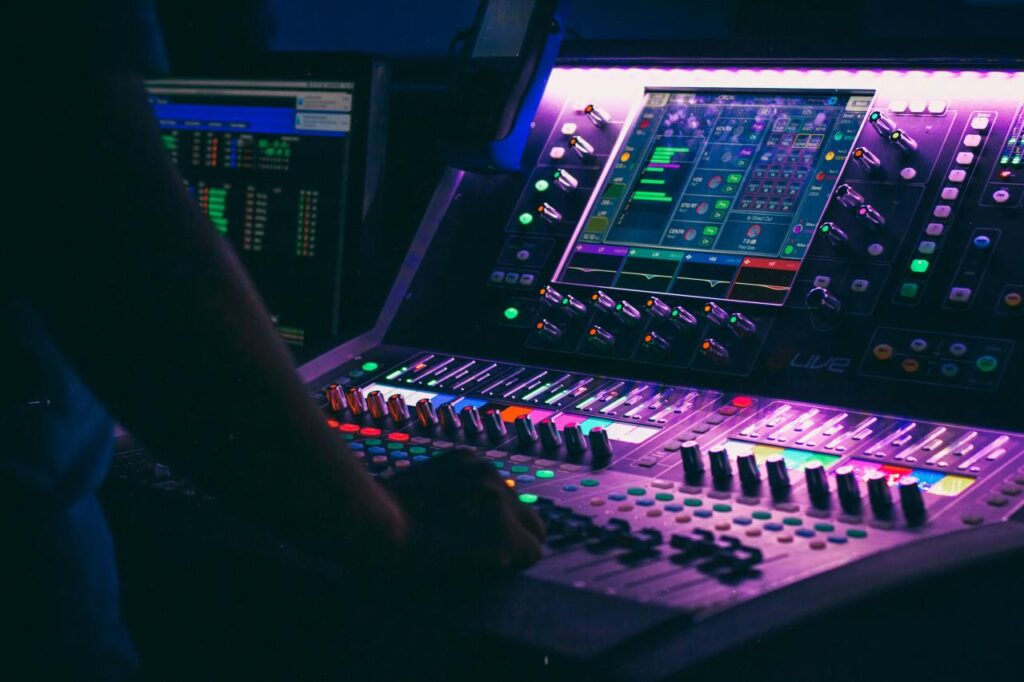
Music is no longer limited to a flat “left-right” stage. Producers are now using spatial computing to create “spherical” albums that place the listener inside the band.
A. Designing Immersive Soundstages for Live Albums
Instead of feeling like you are sitting in front of a stage, spatial mixes make you feel like you are standing next to the drummer. You can hear the crowd behind you and the lead singer right in your face.
B. New Creative Possibilities for Electronic Music
Electronic artists can now “spin” sounds around the listener’s head in sync with the beat. This creates a visceral, psychedelic experience that traditional stereo simply cannot replicate.
C. High-Resolution Audio and Data Bandwidth
Spatial audio requires more data than standard MP3s. The industry is developing new codecs that can deliver 3D metadata without losing the “warmth” and detail of high-fidelity sound.
Spatial Audio in Gaming and Virtual Reality
Gaming is perhaps the most advanced application of spatial computing. In a competitive environment, being able to hear exactly where an enemy is located is a massive advantage.
A. Verticality and Height Perception in Games
Spatial audio allows players to hear the difference between a sound coming from the floor above or the floor below. This is achieved through clever “frequency notch” filtering that mimics how our ears hear height.
B. The Emotional Power of Environmental Ambience
In an open-world game, the sound of the wind changes as you move from a forest to an open field. This constant, reactive audio landscape is what makes virtual worlds feel “lived-in” and real.
C. Procedural Sound Generation and Physics
Instead of playing pre-recorded clips, some games “generate” sound based on the physics of the materials involved. A wooden box falling on stone will sound different every single time based on the angle of impact.
Educational and Therapeutic Applications
Beyond entertainment, spatial computing is being used to help people learn and heal. Sound has a direct connection to our nervous system and memory centers.
A. Guided Meditation in 360-Degree Soundscapes
Therapists use spatial audio to transport patients to a calm beach or a quiet forest. The immersive nature of the sound helps lower cortisol levels and deepen the state of relaxation.
B. Auditory Training for the Visually Impaired
Spatial computing can help blind individuals navigate their environment by using “audio beacons.” These virtual sounds guide the user toward doors, obstacles, or specific points of interest.
C. Interactive History and Virtual Museum Tours
Students can put on a headset and hear a historical speech as if they were standing in the middle of a crowd. This “auditory time travel” makes learning much more engaging and memorable.
Challenges in Standardizing Spatial Technology
Because this tech is so new, the industry is still struggling with how to make everything work together seamlessly. Compatibility is the biggest hurdle for widespread adoption.
A. The Battle Between Different Spatial Formats
There are several competing formats for spatial audio, and not all of them work on every device. This “format war” can be confusing for consumers who just want their music to sound good.
B. The High Cost of Computational Power
Processing 3D sound in real-time requires a lot of battery life and CPU power. Mobile devices are only now becoming powerful enough to handle these complex calculations without lagging.
C. Privacy Concerns with Environment Mapping
To work perfectly, spatial systems need to “know” the layout of your home. This raises questions about who has access to that data and how it is being stored by the manufacturers.
The Future of Smart Home Audio Ecosystems
The ultimate goal of spatial computing is to create a “ubiquitous” audio environment. This means your sound follows you from room to room without any interruption.
A. Multi-Device Hand-Off and Continuity
Imagine listening to a podcast on your headphones and having it seamlessly transfer to your kitchen speakers as you walk through the door. The spatial coordinates stay consistent, so the voice always feels like it’s in the same spot.
B. Voice Control and Directional Listening
Future smart assistants will be able to tell exactly where you are in the room. They can “beam” their response directly to your location, making the conversation feel more natural and private.
C. Integrating Bio-Feedback with Audio Output
Devices may soon monitor your heart rate and stress levels to adjust the spatial qualities of your music. If you are stressed, the soundstage might “widen” and soften to help you calm down.
The Hardware of the Future: Solid-State Speakers
To match the precision of spatial software, we need new types of hardware. Solid-state “MEMS” speakers are the next big breakthrough in audio components.
A. The Rise of Micro-Electromechanical Systems (MEMS)
These are tiny speakers built on silicon chips. They are much faster and more accurate than traditional cone speakers, allowing for the micro-adjustments needed for perfect spatial audio.
B. Eliminating Distortion in Ultra-Compact Form Factors
MEMS speakers don’t have the “wobble” that traditional speakers do. This means you can get studio-quality sound out of a device as small as a pair of glasses or a wedding ring.
C. Energy Efficiency and Long-Term Durability
Because they have no moving parts in the traditional sense, these speakers use very little power. This is essential for the next generation of “always-on” spatial computing wearables.
Conclusion

Spatial computing is fundamentally redefining the boundaries of high-fidelity audio for the modern age. Traditional stereo is slowly becoming a relic of the past as we embrace three-dimensional soundscapes. The ability to treat sound as an independent object allows for unprecedented levels of creative freedom. Head-tracking technology ensures that the digital world remains anchored to our physical reality. Our homes are becoming “intelligent stages” where sound adapts to the specific geometry of the room.
The emotional impact of immersive audio is far greater than anything we have experienced before. Gaming has proven to be the perfect laboratory for testing the limits of spatial sound algorithms. The move toward personalized HRTF profiles means that no two people will hear the world exactly the same way. Privacy and data security remain the most significant challenges for companies building these systems. MEMS technology is providing the hardware foundation needed to make 3D sound truly portable.
Education and therapy are being transformed by the power of immersive auditory environments. The integration of spatial audio into daily life will eventually make it feel as natural as breathing. We are still in the early stages of discovering the full potential of this technological marriage. Investing in high-quality spatial hardware today is an investment in the future of entertainment. Sound is no longer something we just listen to; it is something we inhabit and explore. Start your journey into spatial audio today by exploring the latest immersive mixes on your favorite platform.